
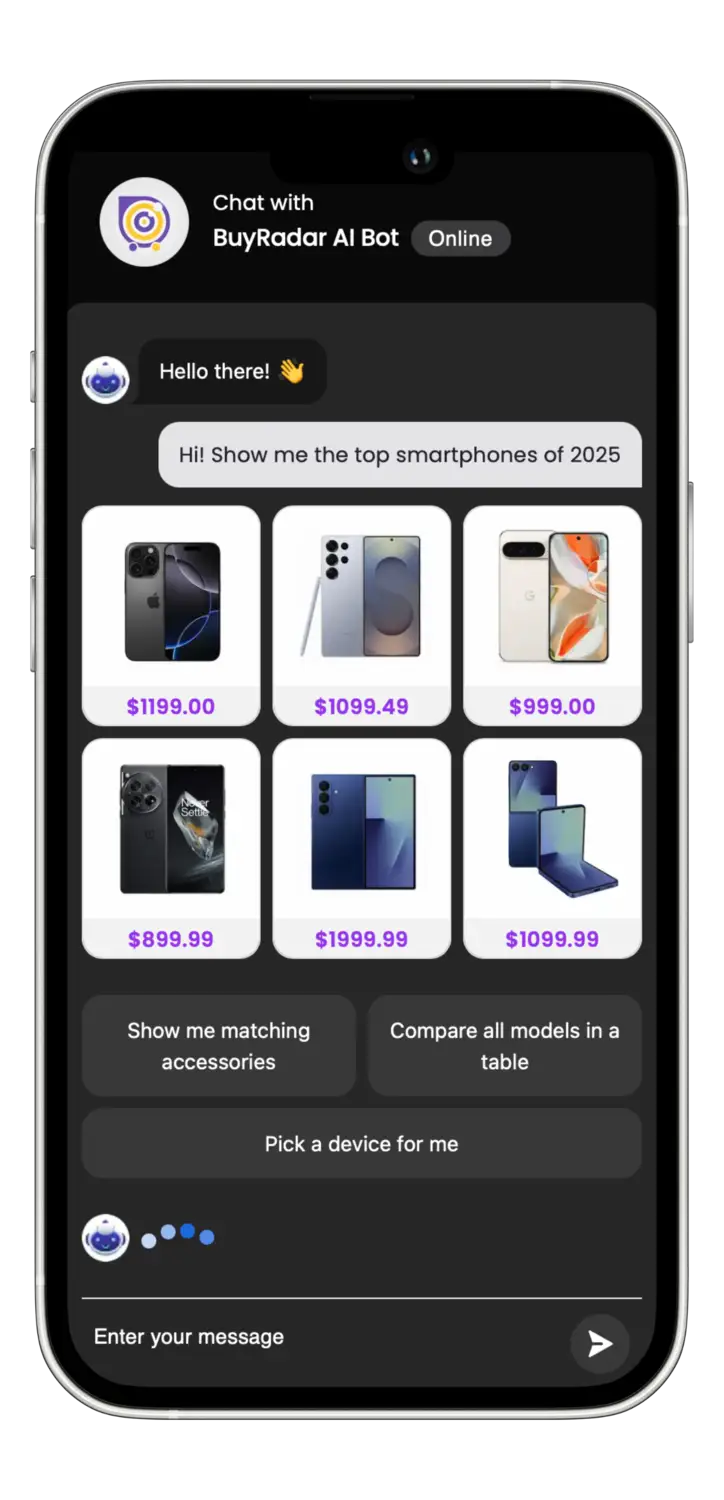
Introduction: Why Every Online Store Needs an AI Shopping Assistant Now
By 2026, the global AI in ecommerce market is projected to exceed $16 billion, with adoption rates climbing as online stores recognize that AI shopping assistants drive 10-25% higher conversion rates compared to traditional browsing experiences. In 2026, AI shopping assistants have evolved into autonomous agents that streamline the online shopping journey. This isn’t a future prediction it’s happening right now.
The shift has been dramatic. Just two years ago, AI shopping assistants were experimental tools reserved for enterprise retailers with dedicated data science teams. Today, they’ve become essential infrastructure for e commerce brands and online stores of all sizes. The reason is simple: customer expectations have evolved faster than most stores could adapt. Shoppers now expect fast, personalized, and conversational experiences that mirror in-store guidance while delivering the convenience of digital channels.
An AI shopping assistant for online stores isn’t just a chatbot with a fancier name. It’s a conversational, intelligent layer built on top of your product catalog one that understands natural language, learns from customer behavior, and guides visitors through their buying journey with personalized recommendations and real-time support, making online shopping more intuitive and efficient.
Tools like BuyRadar.ai have made this technology accessible without requiring a data science team or months of implementation. Modern platforms connect to your existing ecommerce stack and start delivering results in days, not quarters.
If you run an online store and want to turn more visitors into buyers, an AI shopping assistant is now one of the highest-ROI upgrades you can make for boosting sales and customer engagement.

What Is an AI Shopping Assistant for Online Stores?
An AI shopping assistant for online stores is an AI-powered virtual assistant that helps visitors find, compare, and purchase products through natural language conversations. These assistants are designed specifically for shopping online, making it easier for customers to navigate product selections and make informed decisions. Whether deployed on your website, mobile app, or integrated into messaging platforms, these intelligent systems understand what shoppers want even when they can’t articulate it precisely and guide them toward confident purchase decisions.
Common capabilities include:
Product search by intent (“I need a running shoe for flat feet under $120”)
Side-by-side product comparisons with plain-language explanations
Compare prices across different products or retailers to help shoppers find the best deals
Instant FAQ handling for shipping, returns, and sizing questions
Checkout guidance and objection resolution
You’ll see various terms used interchangeably in the ecommerce space: AI shopping assistant, virtual shopping assistant, personal shopping assistant, and conversational commerce agent. While there are subtle differences in emphasis, they all describe intelligent systems designed to improve the online shopping experience through conversation. Traditionally, personal shoppers provided tailored recommendations in high-end retail, but AI has transformed this role by making personalized, automated shopping accessible to anyone shopping online.
Example scenario: A shopper visits an outdoor apparel store in January 2026 looking for eco-friendly winter jackets under $150. Instead of scrolling through 200+ results and manually filtering, they type their request into the AI assistant. Within seconds, they receive a curated selection of five sustainable jackets that match their budget, with explanations of the materials and insulation technology used in each option.
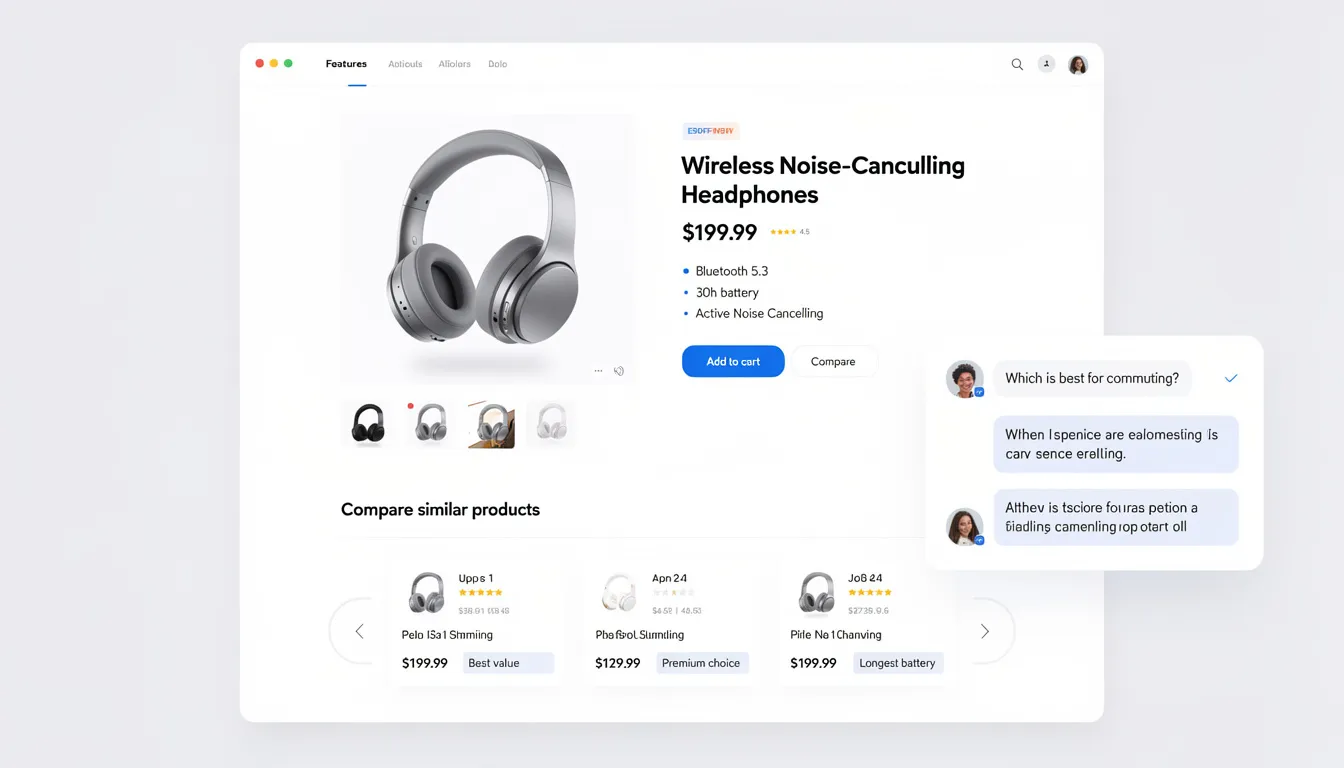
Key Components Behind an AI Shopping Assistant
Understanding the technical building blocks helps clarify why modern AI assistants outperform older solutions:
Component | Function |
|---|---|
NLP/LLM Engine | Interprets natural language queries, understands context, and generates human-like responses |
Product Catalog Indexing | Maintains real-time access to products, attributes, prices, and inventory status |
User Behavior Tracking | Monitors browsing history, browsing patterns, cart contents, and session context to refine suggestions |
Ecommerce Platform Integration | Connects with Shopify, WooCommerce, custom platforms via APIs or native connectors |
These components work together to understand customer intent, fetch relevant products from the catalog, and respond conversationally in a way that feels natural rather than robotic.
How AI Shopping Assistants Work for Online Stores
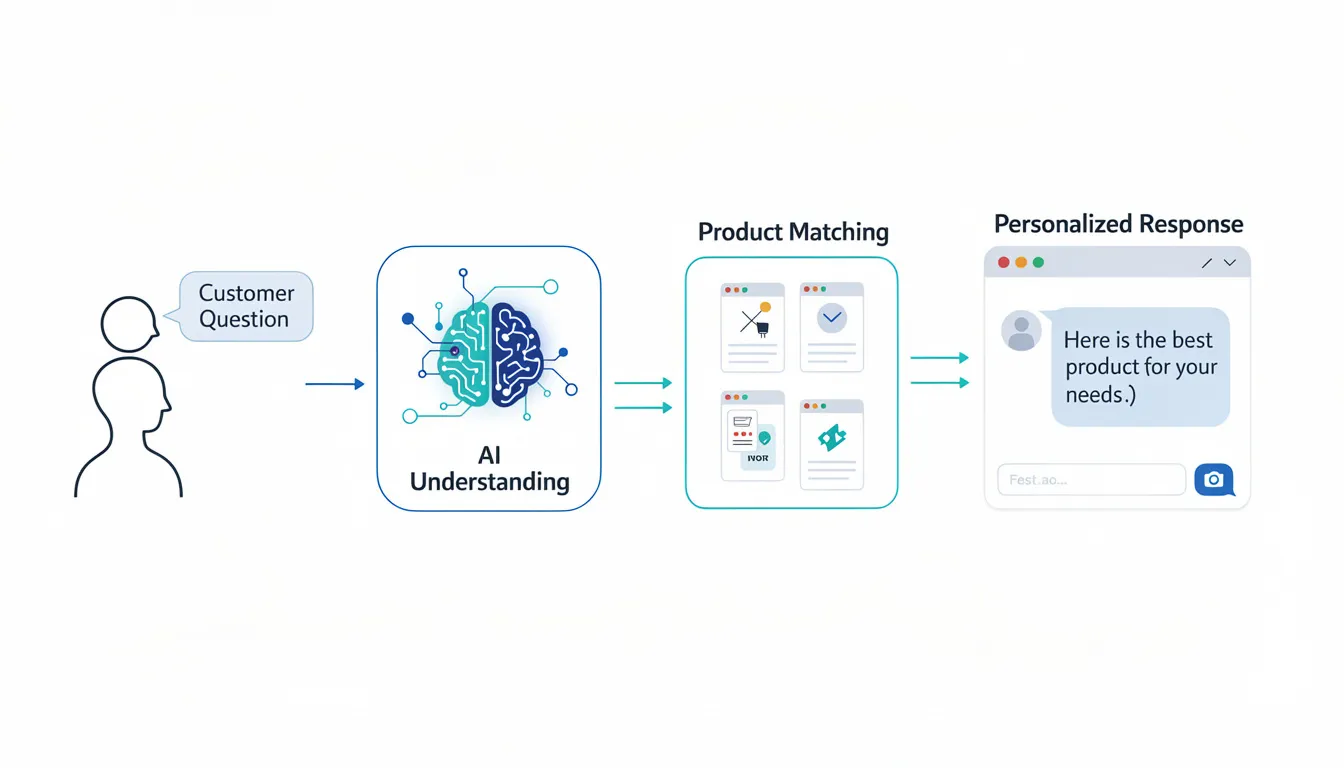
Let’s walk through how an AI shopping assistant actually works, from the moment a visitor lands on your store to the moment they complete a purchase.
Step 1: Visitor Arrival and Initial Engagement A shopper arrives on your homepage or a category page. The AI assistant appears as an embedded chat widget, offering help without being intrusive and initiating chat interactions. The visitor might type: “Looking for a birthday gift for my mom who loves gardening.”
Step 2: Intent Understanding Unlike keyword search, the assistant interprets the full context of this request. It recognizes this is a gift-giving scenario, identifies the recipient’s interest (gardening), and understands the implicit need for something thoughtful and giftable through personalized conversations.
Step 3: Product Matching and Recommendation The system queries your catalog, filtering for gardening-related products that work well as gifts perhaps tool sets, planters, or gardening books. It surfaces a curated set of 3-5 options with brief explanations of why each might work, ensuring the shopper receives relevant information tailored to their needs. Automated research helps compare product specifications, read reviews, and track prices across retailers.
Step 4: Contextual Refinement The shopper responds: “She already has lots of tools. Maybe something more decorative?” The assistant adjusts, now emphasizing decorative planters, garden art, or botanical-themed home goods.
Step 5: Real-Time Data Access Throughout this conversation, the assistant accesses live data stock levels, sizes, shipping options, and current promotions. It won’t recommend an out-of-stock item or miss a relevant discount code.
Step 6: Checkout Guidance Once the shopper adds an item to cart, the assistant can proactively address common objections: delivery timeframes, gift wrapping options, or return policies.
Advanced systems like BuyRadar.ai can be live in days using pre-built connectors and automatic catalog ingestion, eliminating the months-long implementation cycles of legacy solutions.
From First Visit to Repeat Purchase: The AI Shopping Journey
The AI shopping assistant’s value extends far beyond a single transaction. Here’s a concrete example of a complete shopping journey:
First Visit: Sarah discovers your skincare store through an Instagram ad. She’s overwhelmed by the product selection and asks the assistant: “I have sensitive skin and want to start a simple routine.” The assistant asks one clarifying question about her main skin concern, then recommends a three-product starter set.
Adding to Cart: Sarah hesitates at the cleanser price. The assistant notices and offers: “This cleanser lasts 3-4 months for most customers. Would you like to see our travel size to try it first?”
Checkout: Sarah asks about shipping to her zip code. The assistant provides the ETA and mentions free shipping is available if she adds $15 more to her cart then suggests a complementary product that would reach that threshold.
Post-Purchase: Two days later, Sarah returns to check order status. The assistant provides tracking information instantly, without requiring a support ticket.
Repeat Purchase: Six weeks later, Sarah returns. The assistant remembers her sensitive skin profile, past purchases, and analyzes her past behavior to tailor personalized suggestions, such as refills and a new product that complements her existing routine. Trust built through personalized experiences encourages repeat visits to online stores.
Every interaction feeds back into the model’s understanding of customer preferences, creating a personalized experience that improves over time. This lifecycle support is what separates a basic chatbot from a true AI shopping assistant.
Key Benefits of an AI Shopping Assistant for Ecommerce Businesses
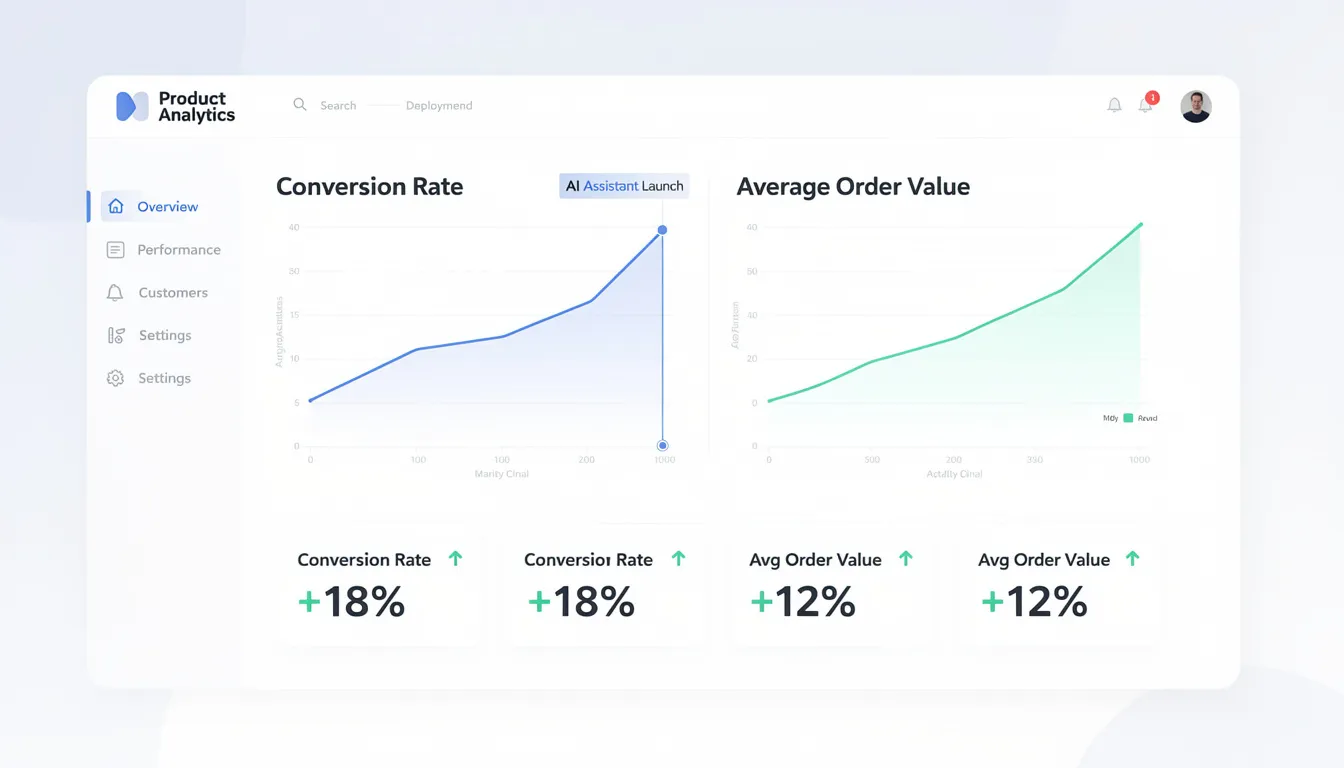
The business case for AI shopping assistants comes down to measurable outcomes: higher conversion rates, bigger average order values, improved customer satisfaction, and significant time savings for both shoppers and store owners. Brands commonly see 10-25% more revenue from the same traffic after implementation.
Here are the key benefits that drive ROI:
Dramatically improved product discovery: Shoppers find what they want faster, even with vague or complex requests, helping them save time
Reduced analysis paralysis: Curated recommendations eliminate choice overload in large catalogs, enabling more informed decisions
Lower cart abandonment: Real-time objection handling addresses sizing, shipping, and return concerns before checkout
24/7 sales coverage: The assistant converts browsers into buyers at 3 AM just as effectively as at 3 PM
Higher average order value: Intelligent upselling and bundle recommendations increase basket size naturally
Fewer support tickets: Common questions are resolved instantly, freeing human agents for complex issues
Actionable customer insights: Conversation data reveals what customers actually want and struggle with
Save time: AI shopping assistants streamline product selection and support, making online shopping more efficient for everyone
These benefits map directly to the KPIs ecommerce teams care about: conversion rate, AOV, customer lifetime value, and return on ad spend. When your traffic converts better and buys more per order, your marketing becomes more efficient across every channel.
AI shopping assistants are particularly impactful for stores with medium to large catalogs fashion, electronics, home goods, B2B parts where choice overload is a real barrier to purchase. Independent brands also benefit, as AI-powered personal shopping services help them compete with larger companies, reach wider audiences, and offer personalized experiences.
Customer Experience Benefits
Conversational shopping makes the online experience feel closer to in-store guidance, even on a simple product listing page. Instead of hunting through filters and scanning dozens of results, shoppers describe what they need and receive tailored options with explanations. Customers can interact with AI shopping assistants not only through text but also via voice assistants, enabling more natural, spoken conversations for product recommendations and support.
Concrete customer experience improvements include:
Faster time-to-product: Minutes instead of frustrating search sessions
Fewer irrelevant results: The assistant understands context, not just keywords
Higher confidence in purchase decisions: Explanations and comparisons reduce buyer uncertainty
24/7 instant answers: Sizing, compatibility, warranties, shipping times, and returns handled immediately
Better experiences drive higher NPS scores, stronger product reviews, and more repeat customers. When shoppers feel understood and supported, customer loyalty follows naturally.
Operational and Support Benefits
AI shopping assistants deflect a significant share of repetitive queries from your support team by handling customer queries autonomously. Order status, basic product questions, shipping estimates, and return policy inquiries can all be handled instantly by the assistant.
For example, Tidio AI as an AI-powered chatbot handles approximately 70% of customer queries autonomously, engaging with shoppers naturally and extensively, particularly when assisting with high-value items.
The operational impact includes:
Metric | Impact |
|---|---|
Live Chat Volume | Reduced by 30-50% for routine queries |
Email Tickets | Significant decrease in pre-purchase questions |
Peak Season Support Costs | Lower staffing needs during Black Friday, Cyber Monday |
Resolution Time | Instant responses vs. hours or days for human agents |
Beyond cost savings, AI assistants provide valuable insights by capturing structured data on what customers ask. This helps teams improve product pages, update FAQs, and adjust merchandising based on real customer needs rather than assumptions.
AI Shopping Assistants vs Traditional Chatbots
If you’ve tried rule-based chatbots before and were disappointed, you’re not alone. Many ecommerce teams implemented early chatbot solutions only to find them frustrating for customers and minimally impactful on sales. Understanding the difference helps clarify why modern AI shopping assistants deliver different results.
Both solutions live in chat widgets, but their capabilities and impact diverge significantly:
Aspect | Traditional Chatbot | AI Shopping Assistant |
|---|---|---|
Understanding | Keyword matching | Intent and context understanding |
Conversations | Scripted decision trees | Open-ended, natural dialogue |
Learning | Static rules | Improves over time from interactions |
Product Knowledge | Limited to pre-programmed responses | Deep catalog understanding |
Primary Purpose | Support deflection | Driving conversions and revenue |
An AI shopping assistant is designed primarily to drive shopping outcomes—product discovery, comparison, and conversion—not just answer support FAQs.
Where Traditional Chatbots Still Make Sense
Simple rule-based bots can still be useful for basic tasks like routing to departments, confirming business hours, or delivering one-line answers to compliance questions. Many modern solutions combine both approaches: an AI shopping assistant handles commerce conversations while rules manage edge cases and required disclosures.
If you already have a helpdesk chatbot, an AI shopping assistant is an upgrade for the shopping side of your business, not necessarily a replacement for everything. The two can coexist, with each handling what it does best.
Why AI Assistants Convert Better
AI shopping assistants can understand nuanced purchase intent across multiple messages, which is essential for complex or high-consideration purchases. They remember context, ask clarifying questions, and adapt their recommendations as the conversation evolves.
Consider these scenarios where AI assistants excel:
Comparing two similar laptops: The assistant explains spec differences in plain language and recommends based on use case
Picking skincare products: The assistant builds a routine based on skin type, concerns, and sensitivities
Building a bundle: The assistant suggests complementary items for a home office setup that work together
Assistants like BuyRadar.ai can nudge users at key decision points, cart hesitation, product comparison, checkout uncertainty with context-aware guidance rather than generic prompts.
How BuyRadar.ai Helps Online Stores Increase Conversions
BuyRadar.ai is a dedicated AI shopping assistant platform built specifically for ecommerce teams who want measurable conversion and AOV gains. Unlike horizontal AI tools or generic chatbots, BuyRadar.ai is optimized from the ground up for product discovery, merchandising goals, and driving purchases.
The platform connects to your store’s catalog and content, learns your products automatically, and starts serving relevant recommendations quickly. There’s no need for months of custom development or a dedicated machine learning team.
Online stores implementing BuyRadar.ai typically see measurable uplift within the first 30-60 days. Fashion retailers report higher conversion rates as shoppers find better-fitting items on the first try. Electronics stores see reduced pre-purchase support tickets as the assistant handles comparison questions. Beauty brands experience increased average order values as the assistant builds complete routines instead of individual product purchases.
See how BuyRadar.ai works across different ecommerce stacks to understand how it fits your store’s technology environment.
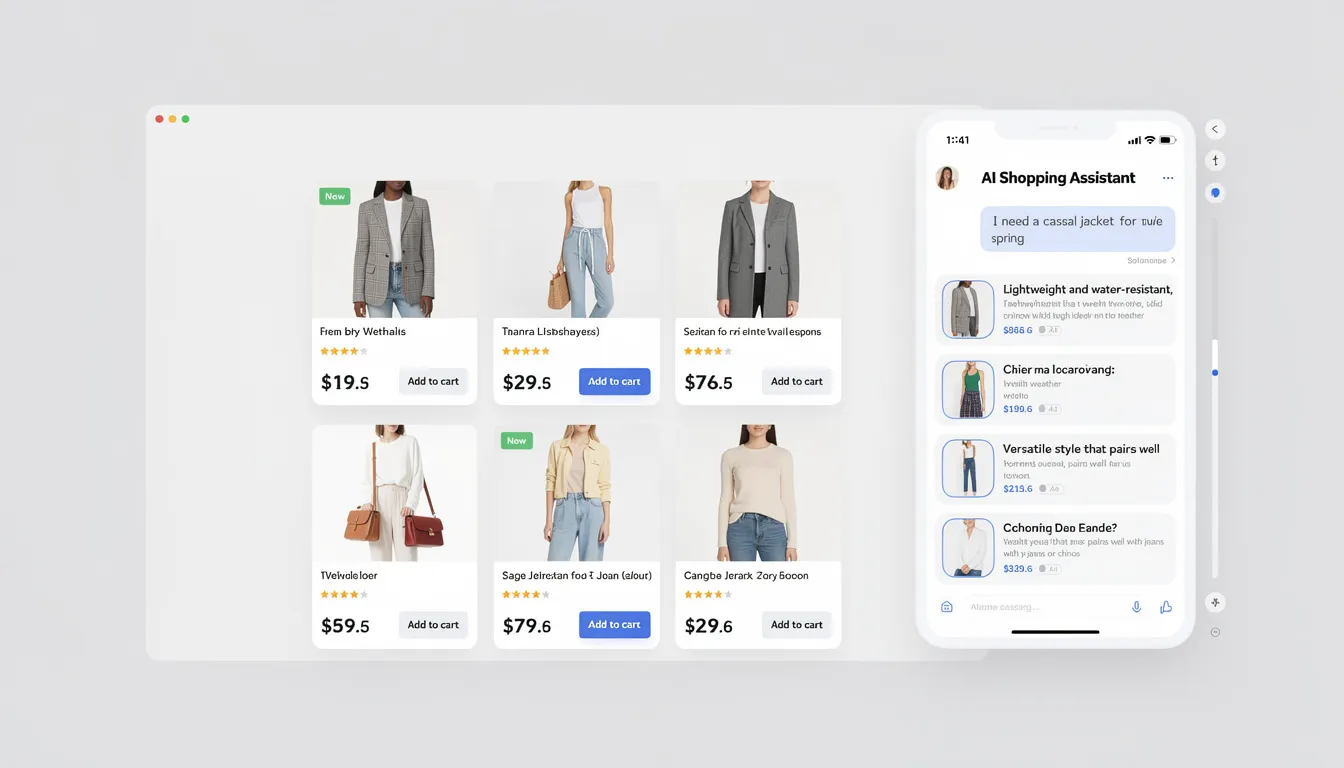
Quick, Low-Friction Setup for Modern Ecommerce Platforms
BuyRadar.ai offers fast integration for popular platforms including Shopify, headless commerce stacks, and custom solutions via API or native connectors. Realistic timelines look like this:
Day 1-2: Connect your catalog and configure basic settings
Day 3-5: Train on store-specific content (FAQs, policies, brand voice)
Day 6-7: Launch with monitoring and optimization
No complex ML expertise is required. Configuration happens through a web dashboard with intuitive controls that merchandising and marketing teams can manage directly.
Learn how BuyRadar.ai connects to your catalog and content for detailed integration information.
Conversion-Focused AI, Not Just Conversation
BuyRadar.ai is optimized for measurable business outcomes: more add-to-carts, higher checkout completion, and bigger baskets. The assistant is tuned to gently guide shoppers toward decisions resolving objections, recommending bundles, and suggesting alternatives when needed rather than just answering questions passively.
Key conversion-focused capabilities include:
Support for merchandising rules (prefer high-margin items, promote specific brands) while keeping recommendations relevant to user intent
Proactive cart abandonment intervention with context-aware messaging
Bundle and upsell suggestions based on what’s already in the cart
Analytics showing exactly how much revenue the assistant influenced
Core Features of BuyRadar.ai (What Sets It Apart)
BuyRadar.ai delivers a comprehensive feature set designed specifically for ecommerce growth. Here are the flagship capabilities:
✓ Natural Language Product Discovery: Shoppers describe what they want in everyday language (“something comfortable for long flights”) and receive curated product sets with explanations
★ Intelligent Product Comparison: The assistant explains differences between similar products in terms shoppers understand, helping them choose confidently
→ Personalized Recommendations: Suggestions adapt based on session behavior, cart contents, and purchase history
⚡ Cart and Checkout Guidance: Proactive assistance at decision points reduces abandonment and resolves objections before they stall the purchase
🔹 Multi-Language Support: Serve international customers in their preferred language without separate configurations
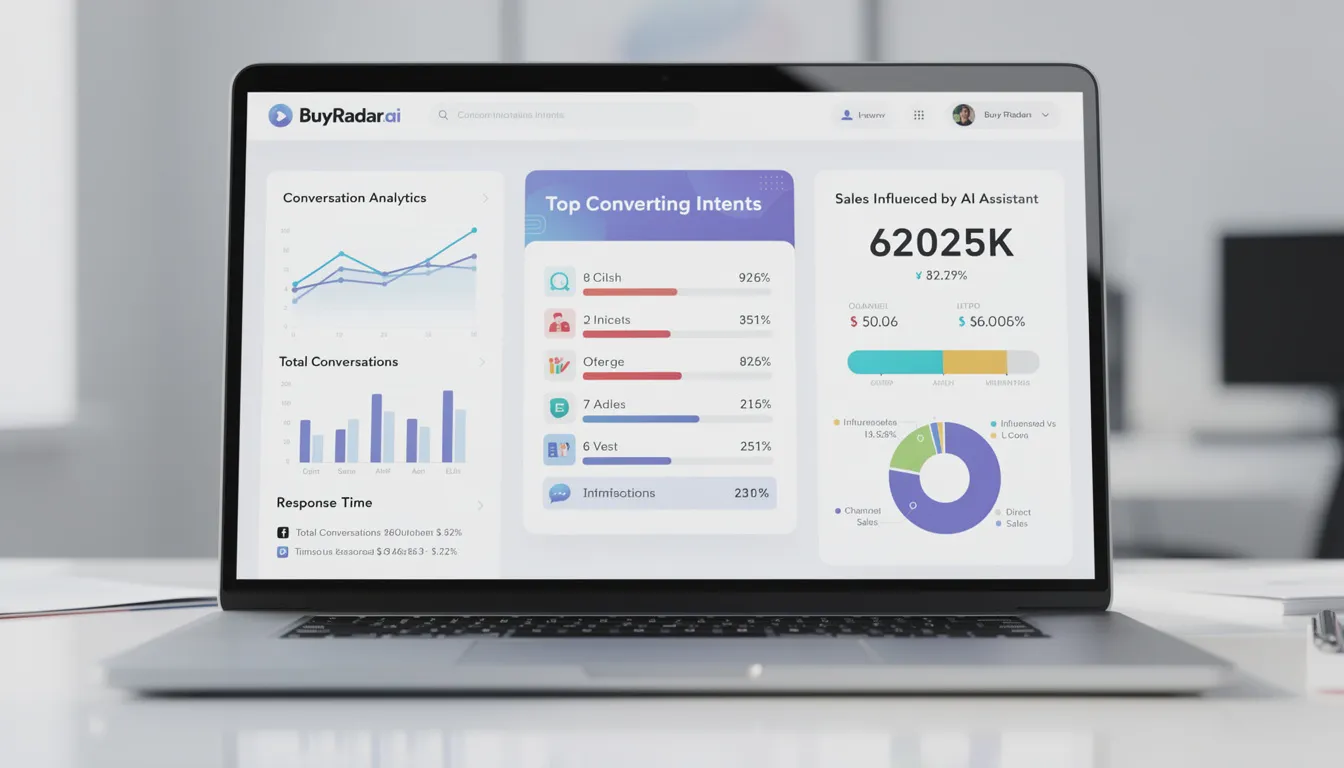
✓ Conversion Analytics: Track sessions with AI, conversion uplift, influenced revenue, and common intents through a dedicated dashboard
Example interaction: A shopper asks “What’s the best gift under $80 for a 10-year-old who loves science?” The assistant responds with age-appropriate science kits, telescopes, or experiment sets from your catalog, with brief descriptions of why each is engaging for that age group.
Explore all BuyRadar.ai features in depth to see the complete capability set.
Personalized, Context-Aware Recommendations
BuyRadar.ai tailors results based on current session behavior, cart contents, and past order history where available. Recommendations adapt in real time as the shopper refines their needs or changes direction.
Personalization examples in practice:
Suggesting sizes based on previous purchases to reduce returns
Recommending accessories that match items already in the cart
Reminding users of recently viewed products they didn’t add
Adjusting recommendations when a shopper changes their stated budget or preferences mid-conversation
This personalization directly impacts AOV and repeat purchase rates by making every interaction feel relevant rather than generic.
AI-Powered Discovery Beyond Keyword Search
Shoppers don’t need to know exact product names or technical specifications. They can describe use cases, problems, or preferences in everyday language:
“I’m remodeling a small kitchen and need storage solutions”
“I need a quiet mechanical keyboard for late-night work”
“Something waterproof for hiking in the Pacific Northwest”
BuyRadar.ai returns curated product sets with explanations of why each option fits the request. This reduces bounce rates from users who would otherwise give up when search results are overwhelming or irrelevant.
Conversion Analytics and Continuous Optimization
BuyRadar.ai includes robust reporting on key metrics:
Metric | What It Shows |
|---|---|
Sessions with AI | How many shoppers engaged with the assistant |
Conversion Rate Uplift | Percentage improvement vs. non-AI sessions |
Influenced Revenue | Total revenue from purchases involving assistant interaction |
Common Intents | Most frequent questions and requests from shoppers |
Teams use this data to refine product descriptions, update collections, or create new bundles based on what people actually ask. The AI model continuously learns from anonymized interaction patterns, improving its recommendations over time without manual intervention.
Generative AI Applications in Online Shopping
Generative AI is rapidly reshaping the online shopping experience, empowering online retailers to deliver highly personalized shopping journeys that drive customer satisfaction and loyalty. By harnessing the power of machine learning and natural language processing, virtual shopping assistants powered by generative AI can understand customer intent, analyze browsing behavior, and provide tailored product suggestions in real time.
One of the standout benefits of generative AI in online shopping is its ability to learn from every customer interaction. As shoppers browse, ask questions, and make purchases, the AI shopping assistant refines its understanding of individual preferences, past purchases, and shopping habits. This enables online retailers to offer personalized recommendations, suggest relevant alternatives, and create engaging customer experiences that feel uniquely tailored to each visitor.
Generative AI also streamlines the shopping process by automating routine tasks and providing instant, helpful answers to customer queries. Whether it’s comparing prices, clarifying product details, or tracking packages, AI-powered virtual assistants can handle a wide range of customer needs autonomously. This not only saves time for shoppers but also allows ecommerce companies to focus their human teams on more complex, high-value interactions that require empathy and expertise.
The integration of generative AI with virtual shopping assistants is fueling significant growth in the virtual shopping assistant market. Online retailers are leveraging these intelligent systems to reduce lost sales by re-engaging customers who abandon their carts, offering personalized product suggestions, and providing real-time support throughout the shopping journey. By analyzing customer data and past interactions, generative AI delivers valuable insights that help retailers optimize their offerings and improve customer engagement.
Real-World Use Cases for Different Online Store Types
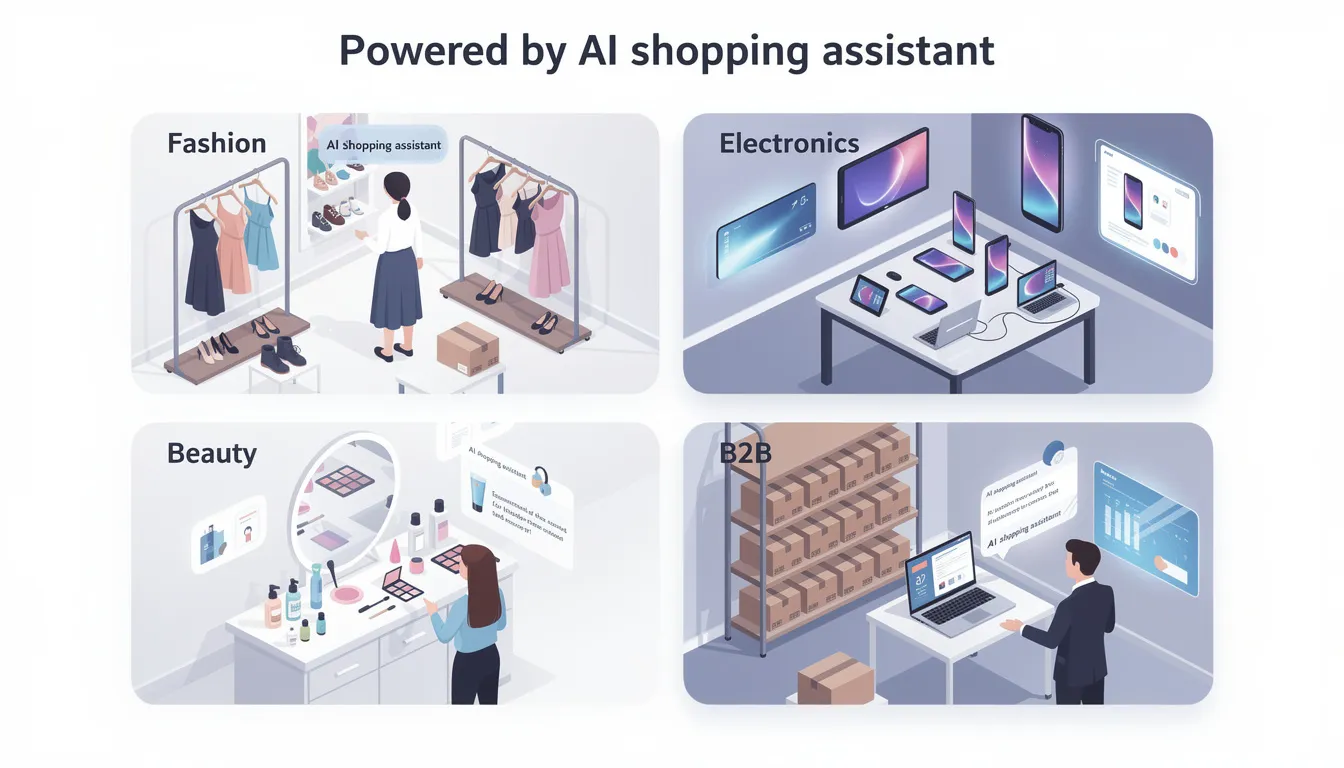
AI shopping assistants aren’t limited to one vertical. They can be configured for different ecommerce niches, each with domain-specific knowledge and language. Here’s how different store types benefit:
Fashion & Apparel Stores
The assistant helps with size recommendations, style advice, and outfit building. A shopper might ask: “Create a capsule wardrobe for spring 2026 under $400” and receive a coordinated set of versatile pieces.
Key use cases:
Interpreting subjective preferences like “minimalist,” “streetwear,” or “office casual”
Suggesting alternatives when preferred sizes are out of stock
Building complete outfits from individual pieces
Reducing returns by steering shoppers to better-fitting items based on past purchases
Electronics & Tech Retailers
The AI can compare specs (CPU, RAM, display) and explain differences in plain language for non-technical customers.
Example: “Help me choose a laptop for video editing and gaming under $1,200.” The assistant suggests 2-3 options with clear explanations of the trade-offs between performance, portability, and price.
Additional use cases include accessory matching, compatibility checks for chargers and cables, and warranty clarification.
Beauty, Skincare, and Health Products
AI shopping assistants can safely guide users through complex product ranges based on skin type, concerns, and sensitivities.
Scenario: “I have sensitive, combination skin and want a fragrance-free routine.” The assistant builds a step-by-step regimen with cleanser, moisturizer, and treatment products, explaining why each is appropriate for that skin profile.
Cross-selling opportunities emerge naturally as the assistant recommends complete routines and sets instead of single products.
Home, Furniture, and Lifestyle
The assistant asks clarifying questions about room size, style preference (Scandinavian, industrial, mid-century), and budget to recommend furniture or decor that fits the space.
Bundle recommendations (sofa + coffee table + rug that visually coordinate)
Summarizing and comparing reviews for big-ticket items
Dimension and fit guidance for furniture purchases
B2B Ecommerce and Complex Catalogs
AI shopping assistants help navigate large, technical catalogs common in industrial parts, medical supplies, and wholesale products.
Practical example: A buyer searches for compatible spare parts using only a machine model and a few constraints. The assistant identifies matching components, confirms compatibility, and suggests related maintenance items.
Time savings and reduced ordering errors make AI assistants particularly valuable in B2B contexts where customers often know what they need but struggle to find it in complex catalogs.
Implementing an AI Shopping Assistant: Challenges and Best Practices
Implementing an AI shopping assistant successfully requires attention to a few key areas. Here’s a realistic look at common challenges and how to address them:
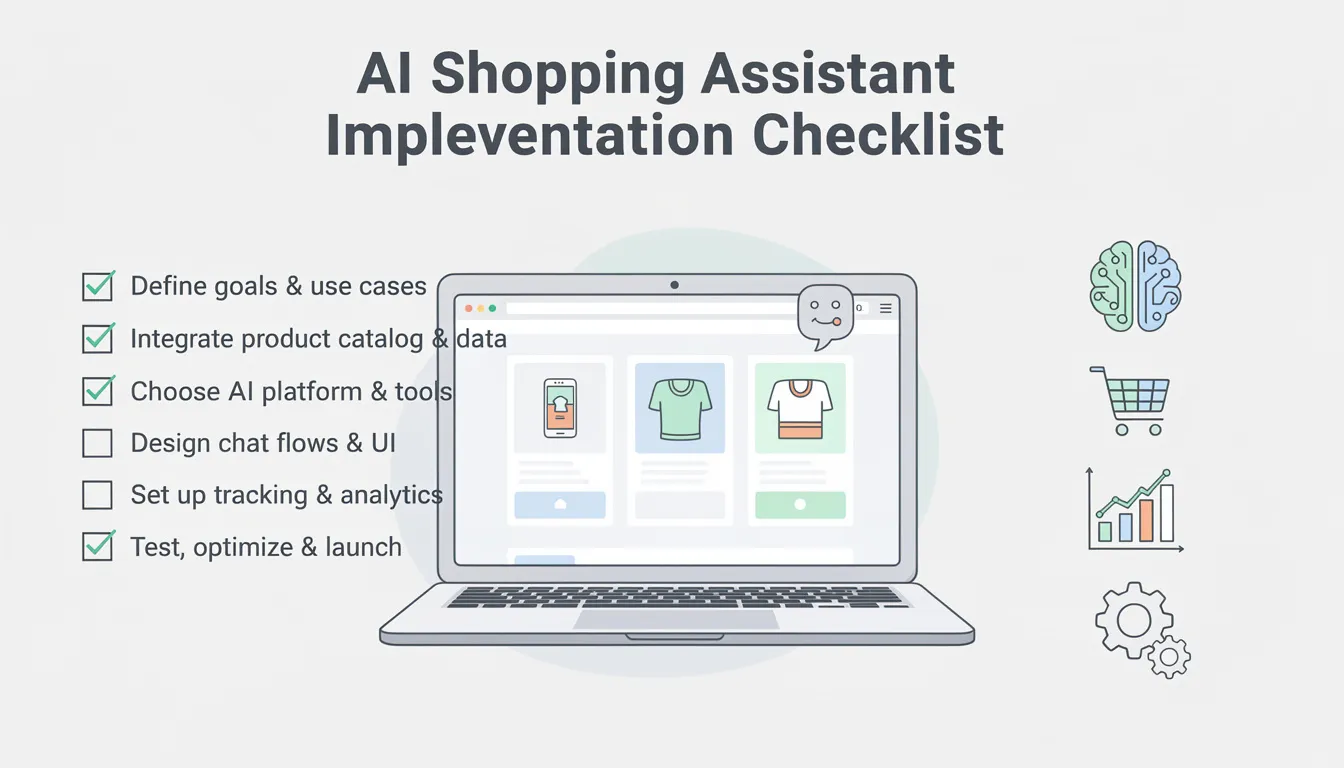
Data Quality and Catalog Readiness
The assistant can only be as good as the underlying product data. Missing attributes, vague descriptions, or inconsistent formatting limit effectiveness.
Practical steps before or during onboarding:
Clean product titles to be descriptive and consistent
Standardize size, color, and material attributes
Add key attributes like use cases, fit information, and compatibility notes
Include relevant details in descriptions (not just marketing copy)
BuyRadar.ai can expose data gaps by showing which user queries the assistant struggles to answer, guiding ongoing improvements.
Integration and User Experience Design
Strategic placement influences usage and impact. Consider deploying the assistant on:
Homepage for first-time visitors
Category pages for shoppers in discovery mode
Product pages for comparison and decision support
Cart page for objection handling and upselling
The widget should feel native to your store’s design—embedded and on-brand rather than a jarring popup. Start with key journeys and expand once you validate performance.
Privacy, Security, and Compliance
Key considerations include:
Handling customer data responsibly under GDPR, CCPA, and other applicable regulations
Being transparent about AI usage in customer interactions
Implementing appropriate data retention policies
Reputable platforms like BuyRadar.ai implement encryption, access controls, and compliance-aligned data practices. Include a short statement in your privacy policy and consider a tooltip indicating AI assistant usage.
Continuous Training and Optimization
Successful stores treat the AI assistant like a digital sales associate that needs ongoing coaching:
Review anonymized conversation logs monthly to identify gaps
Add custom responses for common questions unique to your products
Adjust product mappings when you launch new items or retire old ones
Update the assistant with seasonal campaigns and promotional messaging
Quarterly optimization cycles aligned with new product launches and promotional calendars keep the assistant performing at its best.
Why BuyRadar.ai Is the Best AI Shopping Assistant for Online Stores
BuyRadar.ai stands apart from generic chatbots and horizontal AI tools through its ecommerce-first approach. The platform is trained specifically on product discovery, merchandising goals, and conversion optimization not adapted from a general-purpose assistant.
Key differentiators:
Fast implementation: Live in days, not months
Deep product understanding: Trained on ecommerce patterns and catalog structures
Proven conversion lifts: Stores commonly see 15-25% uplift within the first 60 days
Transparent analytics: See exactly how much revenue the assistant influences
See how leading online stores use BuyRadar.ai for specific use case examples.
Built for Growth-Focused Ecommerce Teams
The ideal BuyRadar.ai customer includes:
DTC brands seeking measurable conversion improvements
Multi-category retailers with complex catalogs
B2B ecommerce teams with technical product ranges
Marketing and merchandising teams who want results, not experiments
The platform fits into existing stacks and workflows. Marketing, merchandising, and support teams all benefit without major process overhauls. BuyRadar.ai is continuously updated to reflect new AI capabilities and ecommerce trends through 2025-2026 and beyond.
From Trial to Scale: Easy to Start, Easy to Grow
Typical adoption follows a sensible path:
Start with a single store or region
Validate uplift with A/B testing (AI vs. no AI)
Roll out across additional markets or brands based on results
This approach minimizes risk while building confidence in the platform’s impact.
Talk to our team about a pilot deployment to start the conversation.
The Future of AI Shopping Assistants in Ecommerce
Looking at 2025-2027 trends, AI shopping assistants will become even more capable and central to the shopping experience:
Deeper personalization: Assistants will anticipate needs based on lifecycle stage and predicted preferences
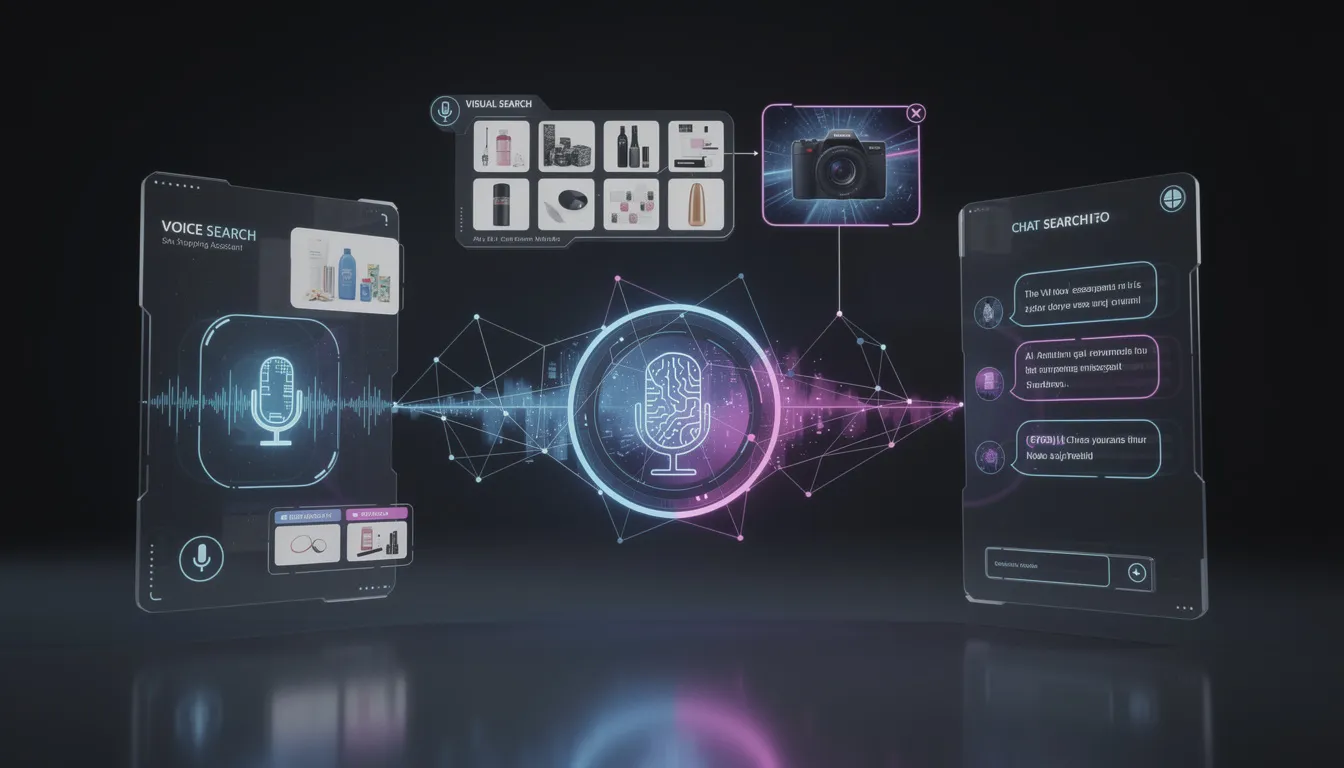
Multimodal search: Combining text, images, and voice for more natural product discovery
Richer conversational experiences: More human-like dialogue with memory across sessions
Autonomous shopping agents: Handling end-to-end tasks like reordering, subscription management, and proactive recommendations
Assistants will increasingly coordinate with marketing (personalized campaigns), logistics (accurate ETAs), and loyalty programs (tailored rewards). Industry forecasts project continued double-digit growth in the virtual shopping assistant market as these tools become competitive necessities rather than nice-to-haves.
BuyRadar.ai’s roadmap aligns with these developments, ensuring current adopters benefit from ongoing innovation without needing to switch platforms.
From Assistants to True AI Shopping Agents
The concept of agentic AI in ecommerce is evolving quickly. Future AI agents will proactively suggest products based on browsing behavior, schedule follow-up messages at optimal times, and manage cross-sell sequences across the customer lifecycle.
Over time, these agents will handle more of the shopping journey autonomously while humans focus on brand, product development, and strategy. Current BuyRadar.ai adopters will see these capabilities integrated into their existing implementation as the technology matures.
Conclusion: Turn Browsers into Buyers with an AI Shopping Assistant
An AI shopping assistant for online stores solves the core problems plaguing ecommerce: overwhelming product catalogs, decision fatigue, and support overload. By providing personalized guidance, instant answers, and intelligent recommendations, these assistants transform passive browsing into active buying around the clock.
The benefits are clear and measurable: higher conversions, increased average order value, better customer satisfaction, and reduced operational strain on support teams. These aren’t theoretical gains they’re results stores are seeing today.
Waiting until AI shopping assistants become a baseline expectation means ceding competitive advantage to earlier adopters. The technology is mature, implementation is straightforward, and the ROI case is proven.
Ready to see the difference an AI shopping assistant can make for your online store?
See BuyRadar.ai in action and let an AI shopping assistant start selling for you 24/7. Get started today to transform your store’s conversion rates and deliver the personalized shopping experiences your customers expect.

Customer Data and AI Assistants: Personalization, Privacy, and Trust
In today’s competitive online shopping landscape, customer data is the engine that powers truly personalized shopping experiences. AI shopping assistants rely on advanced machine learning and natural language processing to analyze customer behavior, preferences, and past interactions—enabling online retailers to deliver tailored product suggestions, relevant alternatives, and helpful answers to customer queries in real time. This level of personalization not only enhances customer satisfaction but also drives improved customer engagement, higher average order values, and more repeat business.
However, as virtual shopping assistants become more sophisticated, the way online retailers collect and use customer data is under greater scrutiny. Shoppers expect a seamless, personalized shopping journey, but they also want assurance that their personal information is handled responsibly. Striking the right balance between personalization and privacy is essential for building trust and fostering long-term customer loyalty.

